
Conheça as obras publicadas pela Libriana Editorial

Produção científica sobre podcast na América Latina e Caribe: tendências e perspectivas
A obra reúne os resultados da primeira etapa de um projeto de pesquisa coletiva desenvolvido pelo GI Radio y Medios Sonoros, da Asociación Latinoamericana de Investigadores de la Comunicación (ALAIC), e apresenta um mapeamento inédito da produção acadêmica sobre podcast na região.
O estudo tem caráter bibliométrico e analisou artigos científicos, livros, teses, dissertações e trabalhos apresentados em congressos de Comunicação, a partir da contribuição de 56 pesquisadores, vinculados a 39 instituições de ensino superior, de oito países da América Latina e Caribe. Os resultados estão organizados em cinco capítulos que revelam tendências, fases de amadurecimento e perspectivas para os estudos sobre podcast.
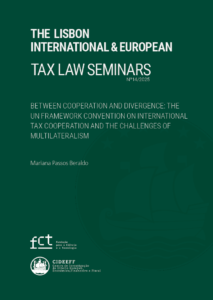
Between Cooperation and Divergence: The UN Framework Convention on International Tax Cooperation and the Challenges of Multilateralism
This paper examines the political, legal, and procedural developments surrounding the United Nations Framework Convention on International Tax Cooperation (UN FCITC), with particular focus on the negotiation of its Terms of Reference and the outcomes of the February 2025 organisational session. Central to the analysis is the question of legitimacy—specifically, whether the UN FCITC can serve as a credible and inclusive vehicle for global tax reform in light of persistent tensions between multilateralism and divergent national interests. A key focus of the study is the representativeness of UN Member States in the negotiation and decision-making processes. It critically assesses the extent to which all States—particularly those from the Global South—have had meaningful opportunities to shape the agenda and institutional architecture of the Framework Convention. The paper also addresses broader challenges such as the rivalry between the UN and the OECD, risks of institutional duplication, and the operational difficulties of establishing a new multilateral legal instrument. Drawing on official documents and academic analyses, the study argues that while the UN FCITC constitutes a significant step toward more inclusive global tax governance, it continues to face legitimacy deficits across three dimensions: input (participation and representation), throughput (process transparency and fairness), and output (effectiveness and equity of outcomes). The Framework Convention reflects a possible reconfiguration of authority in international tax rulemaking—but its success will depend on sustained political will and an institutional design that ensures broad and balanced representation throughout its development and implementation.
Idioma: Inglês
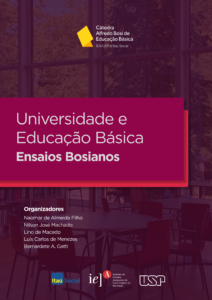
Universidade e Educação Básica – Ensaios Bosianos
Com a participação 51 pesquisadores, a obra apresenta 26 ensaios sobre os temas discutidos nos primeiros cinco anos de existência da Cátedra Alfredo Bosi de Educação Básica, período em que o Itáu Social foi parceiro do IEA na iniciativa. Há também abordagens históricas sobre a educação no Brasil.
Entre os temas discutidos nos ensaios estão os dilemas da educação básica no Brasil, conceitos e teorias da educação, políticas e instituições do campo educacional, tecnologias da informação e comunicação, inovações curriculares em licenciaturas interdisciplinares em ciências e sobre temas contemporâneos transversais, antirracismo, desigualdades e o conceito de competência na Lei de Diretrizes e Bases da Educação Nacional (LDB) e na Base Nacional Comum Curricular (BNCC).
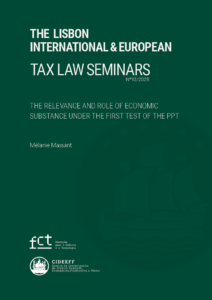
The Relevance and Role of Economic Substance under the First Test of the PPT
The aim of this paper is to determine the relevance and role of economic substance of an interposed company in a treaty shopping situation, for purposes of the first of two tests foreseen by the Principal Purpose Test (article 29(9) OECD Model). Economic substance refers to the objective factors (e.g. employees, personnel, functions and risks) that indicate that a company carries out economic activities.
Idioma: Inglês
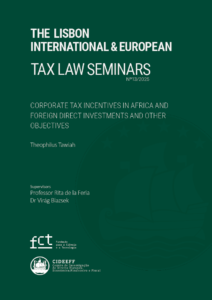
Corporate Tax Incentives in Africa and Foreign Direct Investments and Other Objectives
Social media platforms treat users’ privacy as an economic good, and users must consequently endure this interference when using these services. This obligation to submit to continuous measurement in exchange for the ability to use the platform constitutes the consideration that users provide for the supply of a service under European Union value added tax regulations, and the remuneration is quantifiable in monetary terms. This means that these services are not provided free of charge, thus, a platform entrepreneur should pay VAT in EU countries based on their value.
Online services in 2025 differ significantly from those during the dot-com boom at the turn of the twentieth century. Companies providing online services have refined their business models to search for opportunities to finance their operations in a number of ways. The primary method is the advertising business which often involves significant intrusion into users’ privacy. Therefore, for Internet platforms, the value derived from users’ personal space can be as substantial as the revenue from advertising. The unprecedented degree of user surveillance inherent in these Internet services, something that mankind has never experienced before, necessitates a reinterpretation of the concepts in value added tax regulations to better align them with the economic realities of the third decade of the twenty-first century.
Idioma: Inglês
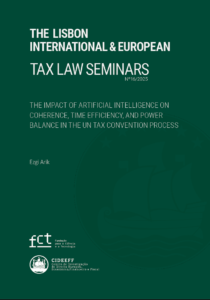
The Impact of Artificial Intelligence on Coherence, Time Efficiency, and Power Balance in the UN Tax Convetion Process
The drafters of the UN Tax Convention aim to create a fully inclusive and effective international tax system. However, the existing power imbalances and incoherence concerns pose challenges to achieving these goals. This research examines whether the current international tax treaty-making framework at the UN reflects these structural inequalities and shows the existence of these inequalities in the early outcomes of the UN Tax Convention negotiations. The study analyses the negotiation process and outcomes using critical discourse analysis, identifying how dominant actors influence the agenda-setting process. It further highlights the discrepancies between declared objectives and the actual negotiation outcomes, revealing how undefined concepts might lead to incoherence in the process and contribute to legal uncertainty.
Considering these challenges in the UN Tax Convention process, this article questions to what extent AI can contribute to forming a more coherent and power-balanced discourse in the UN Tax Convention process than traditional international treaty-making at the UN. As a result of the analysis, the article proposes two potential AI implications in the international tax treaty-making processes: (1) AI as a drafting tool to generate an initial framework for negotiations, (2) AI as a monitoring tool to detect inconsistencies and reinforced power imbalances in the draft documents. The article concludes that using AI as a drafting tool can not only provide a more coherent and power-balanced system but also a time-efficient one. Furthermore, while using AI as a monitoring tool can also provide these benefits, the time-efficiency factor will not be possible in that option.
Idioma: Inglês
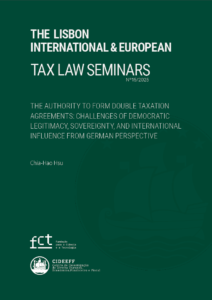
The Authority to Form Double Taxation Agreements: Challenges of Democratic Legitimacy, Sovereignty, and International Influence from German Perspective
This paper analyzes how Germany’s Double Taxation Agreements (DTAs) create tensions between international tax norms and national sovereignty. It argues that while these agreements are vital for cross-border economics, they lead to a “democratic deficit” and a “sovereignty paradox”.
Despite formal parliamentary approval, the Bundestag’s substantive role in DTA negotiations is diluted by the influence of international bodies like the OECD and EU. This results in parliamentary endorsement being more symbolic than truly shaping tax policy. The “sovereignty paradox” arises because Germany’s formal power to amend DTAs is limited by political, economic, and legal constraints, and “soft law” from the OECD acts as a quasi-binding authority. EU membership further limits autonomy by requiring alignment with EU tax policy.
Judicial review by the German Federal Constitutional Court and the European Court of Justice offers limited practical safeguards, as both courts often show restraint in scrutinizing DTA content. This shifts policy-making power to less democratically accountable international institutions.
To counter these issues, the paper proposes institutional reforms based on constitutional loyalty (Verfassungstreue) and constitutional organ loyalty (Verfassungsorgantreue). Key recommendations include strengthening parliamentary mandates, institutionalizing consultations, enhancing public engagement, strategic participation in EU and OECD tax discussions, and safeguarding Germany’s constitutional identity. These aim to balance international integration with democratic governance, ultimately enhancing Germany’s credibility and the legitimacy of its role in global tax governance.
Idioma: Inglês
Publique seu livro com a Libriana
Entre em contato conosco para tirar todas as suas dúvidas e entender como podemos ajudar a publicar sua obra.